Choose a UV printer when the product requires an applied full-color graphic. Choose an appropriate laser engraver when the required appearance comes from changing the material itself: contrast, engraved texture, or a supported cut outline. Neither process name guarantees material suitability, durability, or every visual effect.
A UV inkjet printer deposits ink and cures it with ultraviolet light. A laser engraver changes or removes the workpiece surface to create a mark. The useful comparison is therefore not which machine sounds more versatile, but which process produces the finish the order actually requires.
The Finish Defines the Process
Before comparing equipment, describe what must be visible and tangible on the finished item. A red-and-blue illustration, dark initials against natural wood, a recessed name, and a shaped edge are different requirements. One product may combine several of them, but making the graphic visible does not necessarily complete the object.
Mimaki describes UV-curable ink as ink cured on the media by ultraviolet radiation. Its ink families address different applications, including rigid and flexible media. The printed design is an added ink layer; suitability still depends on the particular printer, ink, substrate, and preparation. The ability to deposit color does not establish that the ink will adhere correctly to every blank.
Laser interaction works differently. Trotec explains that exposure can change a material's color and contrast or cause material to evaporate or burn. Not every laser mark is a deep recess, and not every marking process removes material in the same way. If depth is part of the design, specify that requirement separately from the simple presence of a visible mark.
This distinction also separates a UV printer from a UV laser. In UV inkjet printing, ultraviolet light cures deposited ink. A UV laser is a laser source that interacts with the workpiece. The shared abbreviation does not make the machines interchangeable.
Two Wooden Gift Orders, Two Different Requirements
Consider two hypothetical orders for similar decorative wooden keepsakes. The first asks for natural wooden initials with a material-based appearance: the grain remains visible around the lettering, and the design reads as contrast against the wood. An appropriate laser engraving machine may fit because the mark is created by the wood's response to the laser rather than by adding a colored picture.

The second order uses the same general kind of wooden item but requires a full-color brand graphic. Its acceptance criteria include distinct colored areas and the relationships between those colors. An attractive light-and-dark interpretation would be a different deliverable. If the graphic must be applied in color, a UV printing system designed for the actual blank addresses that requirement more directly than changing the laser's power.
The important exception is the customer's intended aesthetic. Someone may prefer an engraved interpretation of a logo precisely because it does not look like a color print. That can be a valid design choice when agreed in advance. It is not a substitute to make silently after an order has specified color. Compare the proposed sample with the requested finish, not merely with the source artwork on a screen.
The outline is another independent decision. Both orders might use a ready-made blank, in which case the decoration process does not need to cut it. If either requires a custom silhouette, hanging hole, or other cut geometry, that requirement adds a separate process-selection question.
Color, Photographs, and Texture Are Not the Same Promise
A laser-engraved photograph can interpret an image through light-and-dark marks. The visible result depends on the material, source, exposure, and processing method. It may be compelling as a personalized finish, but a tonal interpretation does not preserve the original image's full set of color relationships. Making the engraved image darker is not equivalent to supplying the missing colored ink.
That does not mean all laser processes produce only black and white. Some source-and-material combinations can create color effects. Such effects are not a general-purpose inkjet color process, however, and should not be treated as a promise to reproduce arbitrary full-color artwork on any substrate.
UV printing has its own conditions. Mimaki notes that white ink can provide a base layer to improve color appearance on transparent media. That capability belongs to an appropriate ink system and workflow; it is not a feature to assume on every UV printer. The background behind a graphic matters, so a color sample on one substrate does not automatically predict the appearance on another.
Texture needs an equally precise description. Raised UV ink effects add material above the surface; an engraved recess removes material from it. Both may be tactile, but they are different features. If a design depends on an inset letter rather than a raised one, do not choose equipment on the vague requirement that the result should have “depth.”
A Printed Graphic Does Not Supply a Cut Outline
An inkjet printer applies the graphic; it does not cut the product's edge. A laser may provide a cutting operation only where the exact machine, source, material, thickness, and setup support it. A machine's ability to mark a surface is not, by itself, evidence that it can cut through that stock.
A full-color decoration with a custom silhouette can therefore be a genuinely combined job. That might involve a prepared blank and printing, or separate shaping and decoration processes. It does not establish one universal order of operations. Access to the surface, positioning, the state of the coating, and the safety of each material in the proposed process determine what is appropriate.
In particular, do not assume a printed sheet can safely go under a laser afterward. The base material, cured ink, primer, adhesive, and finish must each be identified and assessed for the specific operation. A printing supplier's list of supported media is not a laser-processing approval for the resulting coated sheet.
Check Adhesion, Laser Suitability, and Service Conditions Separately
For UV printing, the relevant question is whether the selected ink and preparation suit the actual surface. Mimaki's glass-and-acrylic guidance discusses material-dependent preparation and primer use, illustrating why a non-porous surface may need a particular treatment. That does not authorize the same preparation on every material or every printer. Follow the ink and primer manufacturer's application instructions and safety data rather than treating “UV printable” as a universal material property.
For laser work, chemical composition and source suitability are separate gates. Trotec identifies PVC, halogen-containing materials, and certain resins as unsuitable for laser processing because hazardous gases or dust can result. Do not use a burn test to identify unknown stock. Obtain reliable information about the substrate and all coatings before deciding whether laser processing is appropriate.
Neither process has an automatic durability advantage for every product. A decorative keepsake handled occasionally and an item cleaned repeatedly present different acceptance conditions. Consider the intended handling, cleaning method, abrasion exposure, and any required finish. Evaluate those conditions on a representative sample rather than promising that every engraved mark is permanent or every UV print is scratchproof.
The working environment matters too. Follow the exact laser maker's requirements for guarding, wavelength-appropriate protection, extraction, and fire precautions; keep an active laser continuously attended. Printer inks and primers have their own handling and safety requirements. The process comparison is not a reason to bypass either system's precautions.
When Wood Marking Is the Right Choice
Once material contrast on wood is the desired finish, it makes sense to evaluate a laser platform for that task. The TwoTrees TTS-20 Pro laser engraver has manufacturer-listed wood-engraving applications. It is a relevant platform to investigate for wooden initials and similar marks, not a UV inkjet printer or a guarantee of a particular finished result on every wood or coating.
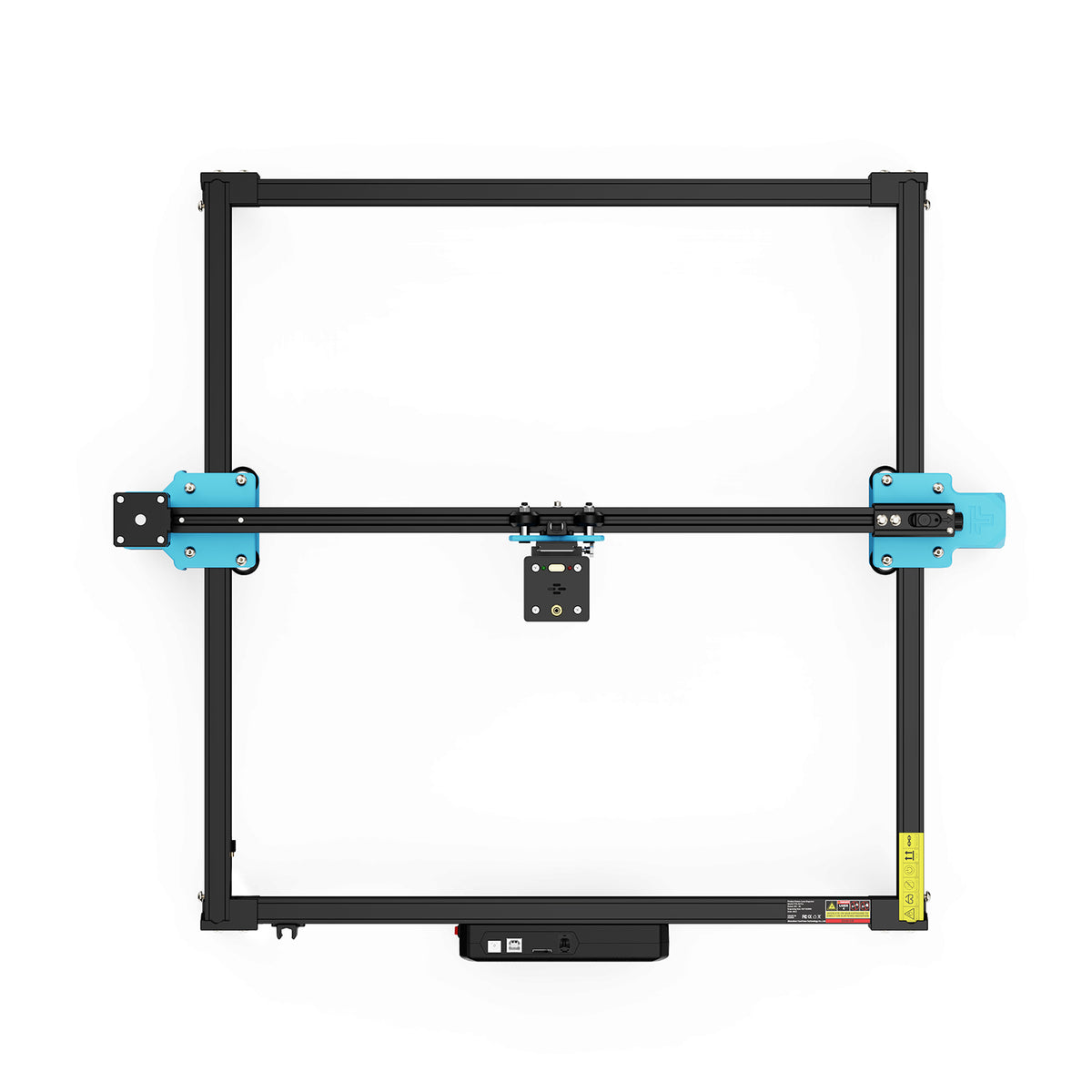
For the hypothetical natural-wood initials, assess whether the actual wood produces the intended contrast and whether the surface texture suits the design. For the full-color graphic, assess the printing system's output on the intended blank. If the product also needs a recessed detail or a custom edge, evaluate that feature as an additional operation rather than assuming that either decoration process supplies it automatically.
A useful sample preserves the actual material, coating, artwork, and service conditions. Judge the requested features individually: whether the color is the intended kind of applied graphic, whether the tactile detail is raised or recessed, and whether the finished shape has been produced by a supported process. If all required features fit one process, the choice is straightforward. If they do not, the job needs a combined workflow or a revised design—not simply a more powerful machine.